
Why Pollinators Matter and How The Rs Farm Supports Bees, Butterflies, and Beneficial Insects
Updated: May 8
There is a quiet kind of work happening all around the farm.
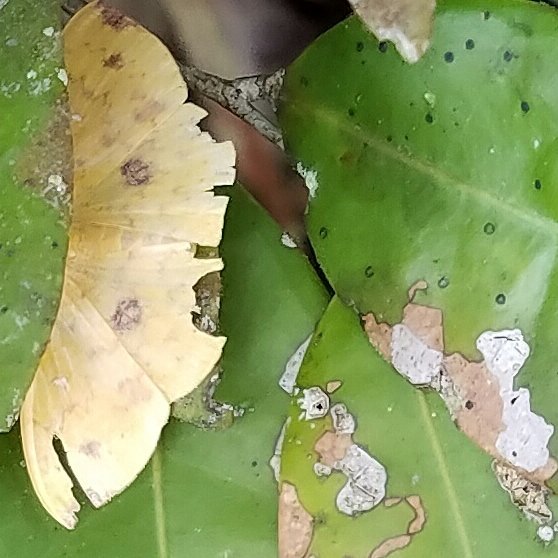
It does not announce itself or wait to be noticed. It moves from leaf to leaf, flower to flower, often without a sound. A bee pauses on a flower, a butterfly settles on a leaf, a bird moves through the branches, and a small insect disappears into the soil. And yet, without them, very little would grow.
At The Rs Farm, located in Yarrowkabra along the Linden-Soesdyke Highway, these small moments are not separate from the experience. They are part of the environment itself. The kind of detail you only begin to see when you slow down enough to look.

Why It Matters
Much of what grows on a farm depends, in some way, on pollinators. Without them, plants struggle to reproduce. Over time, that affects everything else. But their role goes beyond food. They reflect balance.
When pollinators are present, it often means the environment can still support life in a natural way. When they begin to disappear, something in that balance has shifted.
At The Rs Farm, the approach is not about forcing outcomes. It is about observing what the environment can support and allowing that system to remain intact.
Less control. More space for coexistence.
What Shapes Pollinator Life Here
The Guianan landscape is layered. Forest meets open land. Dry ground meets water. Shade meets light. In places like Yarrowkabra, pollinators move through all of these spaces.
Pressures on Pollinator Movement
Repeated clearing or burning can reduce flowering plants
Fragmented land can interrupt movement
Changes in rainfall can affect when plants bloom
Disturbances to water systems can shift insect life cycles
These changes are not always visible right away. But over time, they affect what returns and what does not. Which is why intact spaces matter.
Different forms of life move through different layers of the landscape.
The Role of the Blackwater Creek
One of the quiet strengths of the farm is its access to a blackwater creek.
The water moves slowly. The banks are shaded. Organic matter builds up over time.
This creates a quieter, more layered environment.
You may notice dragonflies moving across the surface. Small insects rising and settling. Life that depends on both water and land.
These areas support insects at different stages of their life cycles. Some begin in the water and move onto land. Others depend on the vegetation along the banks.
Together, this creates a corridor. A place where movement continues, even when other areas shift.

How the Farm Supports Pollinators
Support here does not come from heavy intervention.
It comes from allowing the system to function.
Space for Natural Growth
Not everything is cleared or controlled. That allows flowering plants and natural vegetation to remain, creating food and shelter.
Observation Before Action
The land is not forced into a fixed design. It is observed first. Where plants thrive, insects follow.
Balance Instead of Removal
Not every insect is treated as something to eliminate. Many are part of a larger cycle that keeps the system stable.
Working With Timing
Pollinator activity rises and falls with light, temperature, and rainfall. Paying attention to these patterns helps maintain what is already working.
This is not immediate. It develops over time.
What You Can Take From This
You do not need a farm to notice these patterns. You can start with something simple.
Pause near a flowering plant. Watch what happens. Wait longer than you think you need to.
Notice which spaces attract life, and which ones stay quiet.
Sometimes the difference is not effort. It is attention. And once you begin to see it, you cannot unsee it.
The Rs Farm Context
The Rs Farm is located in Yarrowkabra, along the Linden-Soesdyke Highway, with access to a blackwater creek and surrounded by a forest-savanna landscape.
It is active but not structured as a place of constant activity. It is a space. A natural environment where these interactions are already happening. Where pollinators move freely. Where the land is observed, not over-managed.
Visitors do not come to watch something staged. They come to notice what is already there.
And often, it is the smallest details that stay with them the longest.
Closing Reflection
It is easy to overlook what we do not immediately see. Pollinators remind us that some of the most important work happens quietly. Without recognition or interruption.
At the farm, this becomes clear over time.
You begin to notice movement where you once saw stillness. Patterns where you once saw randomness. And in that shift, something else happens.
You slow down.

Come rest, observe, and reconnect with the rhythms that sustain life.
Visit The Rs Farm and experience what happens when you slow down enough to notice.
References
Food and Agriculture Organization of the United Nations. (2018). The state of the world’s biodiversity for food and agriculture.
Intergovernmental Science-Policy Platform on Biodiversity and Ecosystem Services. (2016). The assessment report on pollinators, pollination and food production.
Smithsonian Institution. (n.d.). Biological Diversity of the Guiana Shield Program.
United Nations Environment Programme. (2020). Global environment outlook 6: Healthy planet, healthy people.
University of Guyana. (n.d.). Centre for the Study of Biological Diversity.
WWF Guianas. (n.d.). Wildlife of the Guiana Shield.


Comments